League Tables and Knockout Brackets Change What a Result Means
League table or knockout bracket formats shape what each result means. Learn how to read standings, fixtures and pairings to follow a competition clearly.
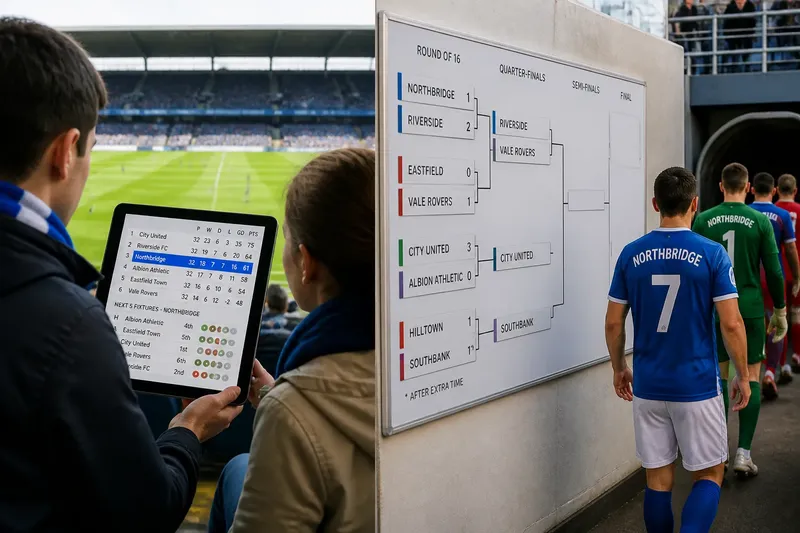
A league table or knockout bracket tells you what a result changes next. In a league, a defeat becomes part of an accumulated record; in a knockout tie, it may end a team’s route through the event. To follow the stakes, first identify the format and the decision each result can affect.
A league table records a continuing contest
League standings compare entrants over a schedule. Depending on the sport and rules, the table may rank teams by points, wins or another stated measure. A loss does not usually remove a team from the competition, but it can make its remaining route to a target position more difficult.
Read the table alongside the fixture list. A team’s position is a snapshot of results already played, while its remaining opponents and their own positions help explain what may still change. A match against a nearby rival can shift both teams’ prospects at once.
Points systems and tie-break rules vary. Check the table key and competition regulations to learn how wins, draws and other outcomes count, and which criterion applies when teams finish level. The order of tie-breaks can matter as much as the criteria themselves.
When reading standings, check the scoring rules, remaining fixtures and tie-break order before treating a position as settled.
A knockout bracket maps a route through the event
A knockout bracket shows who meets whom and which winner advances. In a single-match tie, the losing entrant is eliminated from that bracket. The diagram can also show a possible route to later rounds, but those future opponents depend on the results that have yet to happen.
Some ties are decided across multiple matches. In a two-leg contest, the aggregate score combines the results, so a team can lose one match and still advance. If the aggregate is level, the competition rules specify the next decision, such as extra time, a shoot-out or another method.
Be careful to distinguish the score in a match from the state of the tie. A live score may show one team behind on the night while that team remains ahead across both legs.
When following a bracket, identify whether the pairing is one match or several, and check how a level overall score is resolved.
Compare the consequence, not just the score
The same defeat has different consequences in different formats. In a league, its effect depends on the points system, the remaining schedule and how rivals perform. In a single-elimination tie, defeat can mean immediate exit; in a multi-match tie, it may only leave a team needing a stronger result later.
Imagine you are following a fictional two-leg cup tie. Northbridge loses the first match by one goal, then wins the return match by two. Add the scores across both legs: if Northbridge now leads on aggregate and no further tie-break is needed, it advances despite losing one match. In a league, the first loss would remain in the record and the later win would count separately.
Keep the competition stage beside the score: it tells you whether the result changes a league position, the aggregate state or the identity of the team advancing.
How should you read the format and its stakes?
Can a league position become impossible to recover?
Yes, if the remaining results cannot lift a team to the position it needs under that competition’s rules. That is a consequence of the remaining schedule, not usually an automatic result of one defeat.
Can a competition use both a table and a bracket?
Yes. A competition may use standings to determine which entrants progress or how they are placed in a later round. Read each phase on its own terms: results in the table affect standing, while later bracket ties determine advancement.
What should you check when teams are level in a table?
Find the competition’s tie-break order, then check the relevant figures or results for the teams involved. Do not assume that goal difference, head-to-head results or any other measure comes first; the regulations decide.
Does a higher seed determine an easier route?
A seed can affect an entrant’s position or first opponent, but it does not settle later pairings or results. Check the draw rules to understand what the seed changes and what remains dependent on play.
Use a short format check before judging a result
- Check whether the event is a league or a knockout tie; if it is a league, assess the result against the standings, and if it is a knockout, check the advancement rule.
- Check the points key; if a win or draw is scored as you expected, read the table using that rule, and if not, recalculate the team’s position from the stated system.
- Check how many fixtures remain; if the team still has matches to play, treat its current place as provisional, and if none remain, consult the tie-break rules for any unresolved ranking.
- Check the bracket label for a single match or multiple legs; if it is one match, follow the stated match-deciding rule, and if it is a multi-leg tie, compare the aggregate score.
- Check what happens if the aggregate is level; if a tie-break is specified, follow that method, and if the score is not level, identify the team ahead overall.
- Check whether a seed affects the pairing; if the regulations specify an effect, use it to interpret the route, and if they do not, avoid assuming that a seed changes the opponent.
For league table or knockout bracket coverage, name the phase beside the score and explain what the result changes. That small piece of context helps readers distinguish a setback in a continuing schedule from a step that decides who advances.
When a competition changes format between phases, follow the transition as a separate decision: standings may determine who reaches the bracket, but they do not decide the ties that follow. Keep those outcomes distinct, and the route through the event becomes much easier to read.